Cardiovascular Diseases
Conditions affecting the heart and blood vessels, including heart disease and stroke.
In 2026, World Patient Safety Day focuses on making care safer for people living with noncommunicable diseases across the entire continuum of care.
Noncommunicable diseases, including cardiovascular diseases, cancers, diabetes and chronic respiratory diseases, often require care over long periods and across different healthcare settings.
This can create multiple points where patient-safety risks may arise. The 2026 World Patient Safety Day campaign calls for safer care throughout the patient's journey — from prevention and early detection to diagnosis, treatment, long-term management and self-care.
Conditions affecting the heart and blood vessels, including heart disease and stroke.
A group of diseases involving abnormal cell growth that can require diagnosis, treatment and long-term follow-up.
A chronic condition requiring ongoing monitoring, treatment and self-management.
Long-term conditions affecting breathing and respiratory health that may require continuing care.
Safety is important at every stage of managing a noncommunicable disease.
Supporting people to understand risk factors and make informed choices that can reduce health risks.
Appropriate screening and timely assessment can help identify disease and guide further care.
Accurate and timely diagnosis is an important part of safe and appropriate healthcare.
Safe treatment requires appropriate communication, medication practices, monitoring and coordination.
Ongoing care should remain coordinated, understandable and responsive to changing patient needs.
Patients and families can play an active role by following care plans, attending reviews and raising concerns.
Clear medication information, appropriate prescribing, dispensing, administration and follow-up are important components of safe care.
Accurate communication, appropriate investigations and timely follow-up can support safer diagnosis.
Sharing relevant information between healthcare providers and across settings helps support coordinated care.
Patients, families and healthcare workers should have opportunities to ask questions, clarify information and raise concerns.
People living with noncommunicable diseases can be active partners in their care. Speaking up, sharing information and understanding the care plan can support safer healthcare.
Tell your healthcare provider about medicines you are taking and any known allergies.
Ask questions when you do not understand your diagnosis or treatment.
Keep appointments and recommended follow-up visits.
Follow agreed treatment and self-care instructions.
Tell healthcare workers if your symptoms change or if something concerns you.
Share relevant information about your health with members of your healthcare team.
People living with NCDs should be meaningfully involved in their own care and in efforts to make healthcare safer.
Safe care is a shared responsibility.Safer care requires healthcare systems and health workers to identify risks, communicate effectively and learn from patient-safety concerns.
Share important information with patients, families and other members of the healthcare team.
Collaboration across healthcare disciplines supports coordinated and safer care.
Patient-safety concerns and incidents can provide opportunities for learning and improvement.
Encourage patients to ask questions and participate meaningfully in decisions about their care.
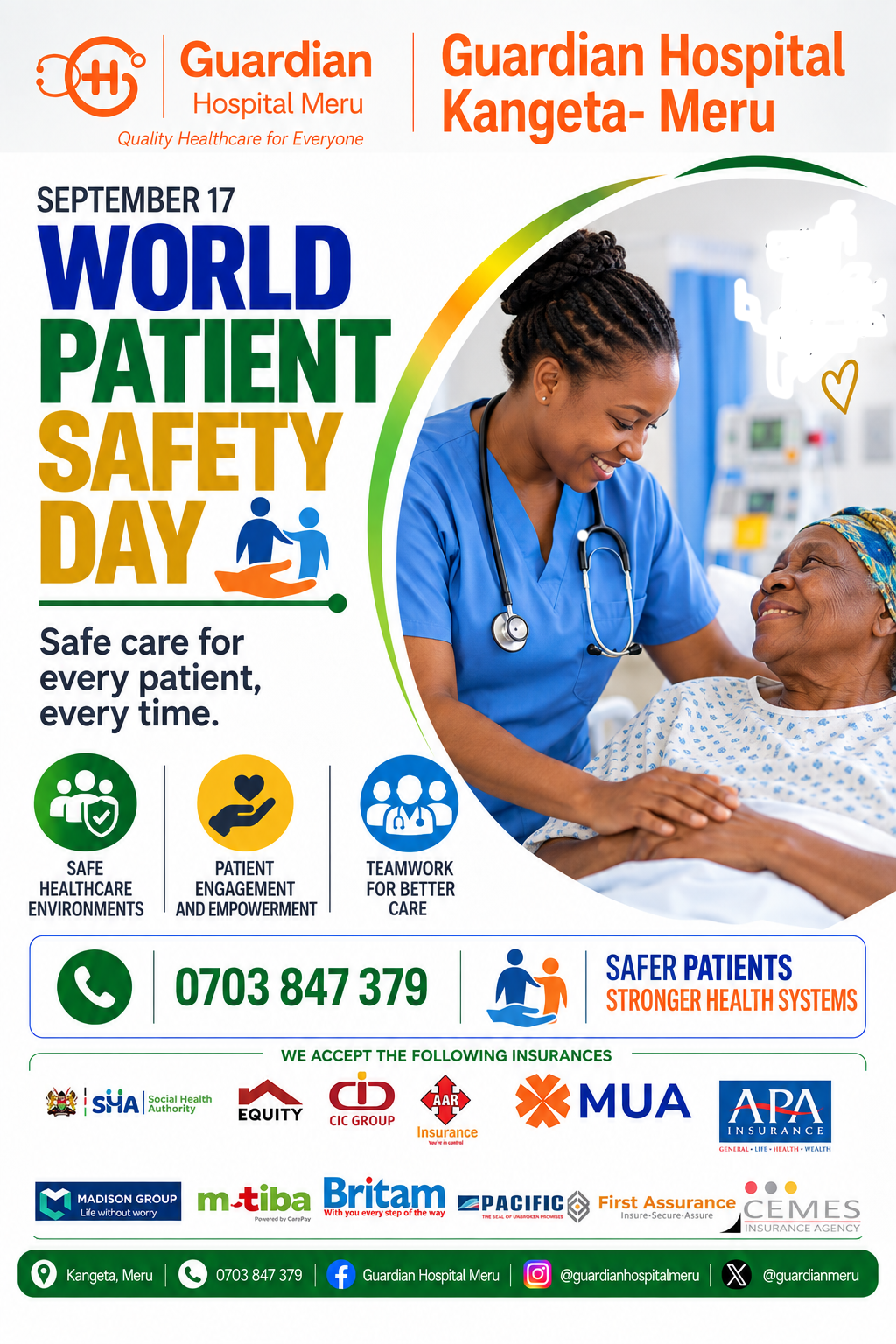
At Guardian Hospital Kangeta – Meru, we recognize patient safety as a shared responsibility. Safe healthcare depends on communication, teamwork, patient involvement and practices that help reduce avoidable harm.
On World Patient Safety Day 2026, we join the global conversation on making care safer for people living with noncommunicable diseases.
Safety risks can arise from prevention through diagnosis, treatment, long-term management and self-care.
Integrated health systems and a supported health workforce are important for safer NCD care.
People living with NCDs should be meaningfully involved in their care and in identifying safety risks.
The 2026 theme is “Safe care for noncommunicable diseases” with the slogan “Safe care for life!”
Noncommunicable diseases are long-term conditions such as cardiovascular diseases, cancers, diabetes and chronic respiratory diseases.
People living with NCDs may require ongoing care over long periods and across multiple healthcare settings. This creates repeated opportunities where safety risks can occur.
Patients can provide accurate health information, ask questions, understand their treatment plans, follow recommended care and raise concerns when something is unclear or does not seem right.
No. Patient safety is a shared responsibility involving healthcare professionals, patients, families, healthcare organizations and wider health systems.
Speak with a member of your healthcare team whenever you need clarification or have concerns about your care.
